


Koa replacement necks made from a reclaimed bunkbed
-
 Aaron Cheney
- Woods
- Nov 30, 2023
-
1148views

Over four decades ago, when Warmoth was a fledgling company, Ken Warmoth was a father with young kids at home. The kids needed a place to sleep. Ken didn’t have a lot of money, but he did have access to a lot of wood
I love to see guitars made of repurposed or reclaimed wood. It’s always exciting to observe the process as a seemingly worn-out piece of wood is given new life as a guitar or bass replacement neck or body. I’ve seen guitar bodies made of wood reclaimed from old hockey sticks, industrial pallets, sunken logs, skateboards decks, surfboards, outhouses, barns, and bridges. Perhaps the coolest thing about a guitar made from upcycled wood is that it has history already built-in; it’s a new guitar with an old soul.
Warmoth is no stranger to the philosophy of conserving and repurposing. We have always tried to “use the whole buffalo”. For us, that’s just business as usual. While the use of reclaimed wood isn’t an overt part of our branding, I know of at least one instance where we have built parts from repurposed wood, and it’s a pretty cool story.
Over four decades ago, when Warmoth was a fledgling company, Ken Warmoth was a father with young kids at home. The kids needed a place to sleep. Ken didn’t have a lot of money, but he did have access to a lot of wood and the engineering chops to design a bunk bed…and that’s just what he set about doing.
In those days Koa was plentiful, and only $1.80 a board foot – cheaper than even Alder at the time. It arrived in the Pacific Northwest through the Port of Tacoma, where it was pushed through dry kilns and marketed. As Ken himself recalls, “There were warehouses full of the stuff. I used to be able to go sort through units of Koa, searching out figured and colorful stock. I’ve always loved the smell of Koa. It’s easy to work with, and it looks so pretty. So I built a Koa bunk bed and finished it in some kind of tongue oil. Of course, the kids didn’t much care what the bed was made of. What would they know about such things? To them it was just a bed that their dad made for them, and it was so much better than a mattress on the floor!”
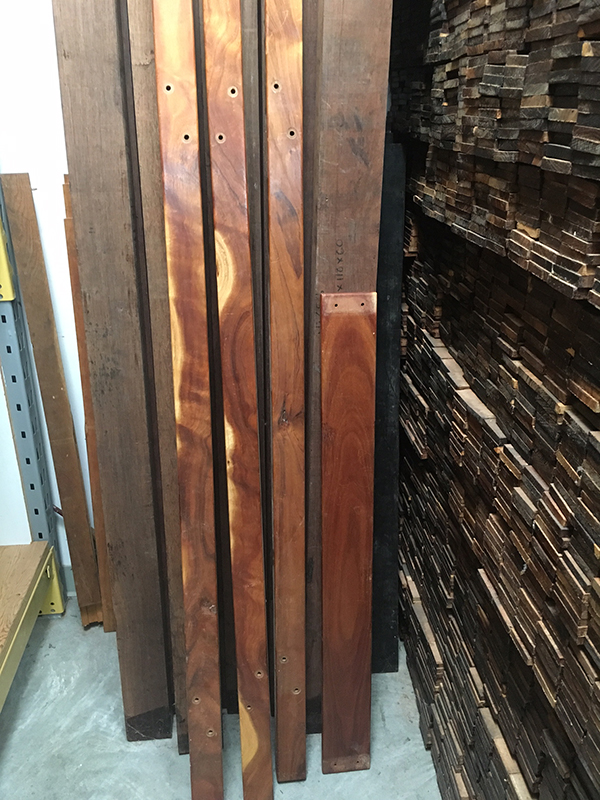
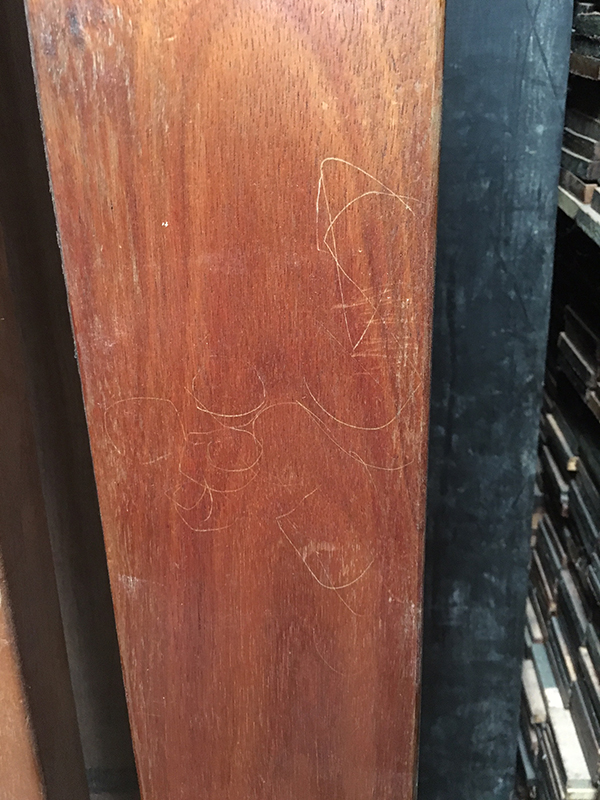
The kids slept in the bunk bed for years. After they were grown and gone, the bed was dissembled, and the parts leaned up against a wall in the family garage. In the years since then Koa has become a rare and coveted commodity. Today the price is over ten times what it was in the 1980’s. The rising cost of Koa prompted Ken to examine his stockpiles, and it was then that he rediscovered the old bunk bed. The end and side boards were soon recycled into Fender Strat® and Tele® replacement necks and sold. Right now, somewhere in the world, there are guitarists playing necks that were once a bunk bed. The corner posts still remain, and one day they will mostly likely become guitar necks too.
Ken saw the future of Koa this way: “Hawaii isn’t a very big place and I guess that they logged out all the readily available Koa. I’ve heard that the state has halted further exploitation. Perhaps at some time in the future there will be a new forest of Koa to cut. For the time being though we must assume that the Koa we have ratted away is all that we’ll ever get. When it’s gone, it’s gone. I haven’t been too keen on using up our stockpile of Koa, but then again I don’t want someone building my casket out of it either. I think it’ll begin to appear in the Showcase one of these days. It won’t be cheap but it will be pretty.”
New to Koa? Here's the Skinny
Koa (Acacia Koa) is a warm, beautiful wood endemic to the islands of Hawaii. It grows relatively quickly, but its limited habitat makes it extremely rare. It was used by the ancient Hawaiians to build canoes and surfboards, and is used today in the crafting of fine furniture. It has also come to be prized as a tonewood, particularly for use in making ukuleles and guitars.
Warmoth uses Koa in the construction of both guitar and bass bodies, and necks. It is medium to heavy in weight, with a density and strength very similar to Mahogany. Its overall warm tonality is also quite similar, though Koa exhibits a bit more brightness.
Koa has golden or reddish brown coloring, with stripes of tan or brown. It can also develop a flamed figure that is exceptionally beautiful. We reserve these special blanks for use as thin laminate tops. When bookmatched and finished in clear gloss (as shown above) the results are stunning.