

Berklee alumni Jake Baynes is making waves in Nashville.
-
 Aaron Cheney
- Musicians
- Jan 29, 2024
-
986views
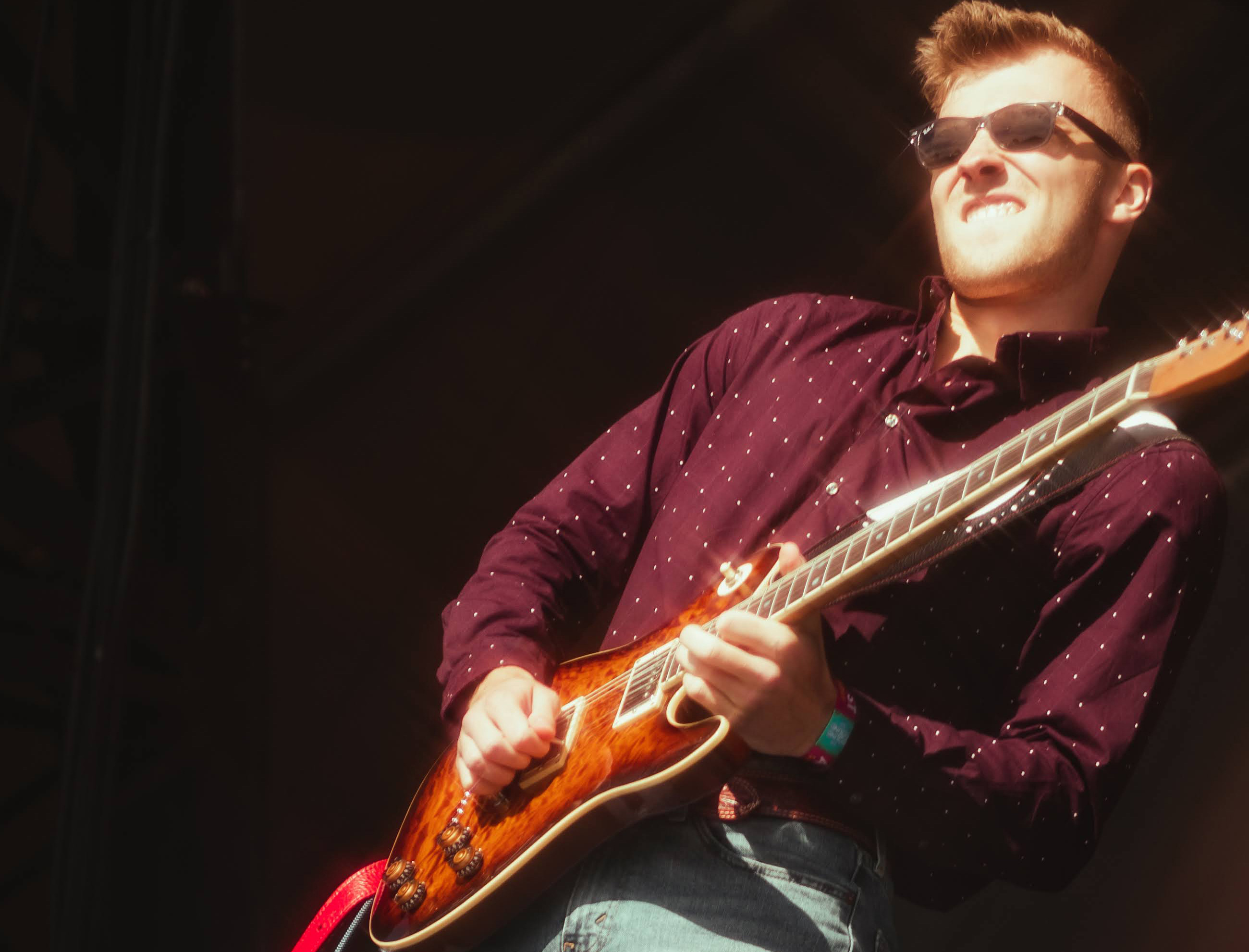
Boston may seem like an inauspicious place for a blues guitarist to get his start, but after being introduced to the blues at an early age Jake Baynes has never looked back. As a teen he found himself on stage with the likes of blues legend Robben Ford, and performing with his high school jazz combo at the nationwide Berklee Jazz Festival, where they won first place in both 2018 and 2019. Jake was also awarded Outstanding and Superior musicianship awards.
This early success pushed Jake to attend Berklee College Of Music, where he completed a degree in Music Business Management and Marketing. After graduating Berklee Jake relocated to Nashville, where he hopes to blaze a trail with his searing brand of fiery blues playing. It's an original blues stew, seasoned with the flavors of Robben Ford, Sean Costello, and Albert King.
Jake recently took a few minutes to chat with me about his early influences, his Berklee experience, and the Warmoth parts he uses to craft his unique take on the blues.
How did a kid from Boston get introduced to the blues?
The introduction to blues music for me was a combination of my father, grandparents and my childhood guitar teacher. The big turning point was my introduction to Robben Ford. During the beginning stages of me learning the guitar (around 12yrs), I was very into heavy music. This quickly changed when I was introduced to Robben by my guitar teacher at the time, Eric. One day after school I remember listening to music on Pandora and Robben’s “Revelation” came on the radio. The soul and phrasing of his music captivated me. Not long after that I found SRV and began revisiting all of the music that I had grown up with. I was hooked! I soon found the Kings, Sean Costello, Kirk Fletcher, Matt Schofield and more. I now listen to, play and love pretty much any genre of music put in front of me. My common answer is “I love any kind of music that feels good and grooves.”
You got to jam w/ Robben Ford at an early age, and I know it had a profound impact on you. How did that come about?
This opportunity is something that I am still incredibly grateful for today. I was about 15 years old at the time when it happened. I had taken a bunch of videos of me playing over Robben Ford tunes, then posted them everywhere that I could in hopes that he would see them. To my luck, he did. I was very fortunate as I had just gotten home from school the day of his show when I received the call. I remember quickly phoning my father who was still at work. He drove home from work at that exact moment when I had called him and we flew down the highway to get to Natick MA. I will never forget walking into the Natick center for arts and having Robben walk around the back of the stage and greeting me. It was a dream come true. While there, he shared incredible advice with me and let me sit in during the show. Something that has stuck with me since meeting Robben was the importance of listening, not only to the music in the moment but with life in general. The show he put on that night with Lee Roy Parnell and Joe Robinson was absolutely surreal.
Are you still in contact with him?
I am! I am very fortunate to still be in contact with him and to hear his wise words.
After high school you attended and graduated from Berklee. Kind of a lucky break that it happens to also be in Boston. Did you live at home while attending?
While attending Berklee, I was given two options. Stay at home, or figure out how to afford living in Boston to attend school. With home being 50 minutes by car (with Boston being impossible to park in) and the inability to stay the night in the city, I decided to find a place to live in the city. I was extremely fortunate that I was able to gig and teach lessons while attending school as it considerably helped me afford the expenses. The benefits of living in the city vs being home were immense as I was able to attend late night events, network at functions that ran late, and more.
Do you now owe them a billion dollars, and if so…..how are you going to pay that off as a musician?
I certainly have quite a large chunk of student loans that I owe back to Berklee. Thankfully the knowledge that I gained at Berklee has helped my success in paying these loans back.
Is a formal education a path you would recommend to other budding blues guitar players?
The answer to this is complex. Formal education as a musician will definitely improve your musicianship due to the forced competitiveness, increase of knowledge, exposure to a concentrate of diverse genres of music. At the same time, formal education can cause a musician to overcomplicate, burn out, and overthink their playing. I personally think that being in an environment that is surrounded by music and the motivation to improve is your best scenario. I went to Berklee to study Music Business Management/Marketing. I found this to be very useful as it has given me a deep understanding of the industry and helps me with my artist management / marketing for myself. Something I get asked a lot is if doing music business at Berklee took away from playing time at school. The answer to that is NO! I spent a fantastic amount of time playing at school while learning about the industry as well. Long story short, a music education can be extremely beneficial if you are able to keep a good head on your shoulders. Being surrounded by quality musicians who are quality people will give you the best benefit.
I’ve seen clips of you jamming with instructors and other students while at school. Everyone knows that performing on the reg with other elite musicians will push you to become better, but in what ways did school influence that you didn’t expect?
I learned the most at Berklee from my peers. Everyone at Berklee was so talented. With everyone pushing to do the same thing, it really pushed me to work on perfecting my craft. Something that was deeply instilled into me at Berklee is - there are zero excuses to not be prepared. With everyone holding themselves to such a high expectation, it certainly was very beneficial now that I am officially on the scene.
I know that right after graduating from Berklee this year you moved to Nashville. If what they say about Nashville being a ten-year-town is true, you have about 9-1/2 years to go before anybody cares that you’re there. Are you finding that to be true, or have you managed to gain some traction in the short time you’ve been there?
Like anything, hard work, dedication and being authentic will always get you far. It's all about your network and how hard you are willing to work for those that surround and support you. I have certainly been very lucky as I have been on the road for the majority of the time since I got to Nashville.
I’ve been to Nashville many times, and the talent level is insane. You can walk down Broadway at 11:00 on a Monday morning, and every bar already has two bands going, and every band is the best band you’ve ever seen. Was Berklee enough?
I think that no matter where you go that has a music scene, there will always be some person, group, idea that will trump your abilities and bring you back into the shed. Nashville has styles of playing that I never experienced at Berklee and vise versa. I have been finding new musicians who have changed and challenged my thinking and ability on the instrument.
It’s apparent in the videos you post that you are playing with high caliber bandmates. In a world where there are about ten guitar players to every great bass player and drummer, and about 100 guitar players to every great singer, what are you doing to be the guitarist that gets those gigs?
I think what I value most when it comes to what I provide as a musician are these things. I am genuine and I keep other musicians' needs and demands in front of mine. I never show up unprepared to any gig or rehearsal. I always play at my best ability when playing with other people. I be as kind as I can to everybody. Positivity in even the worst situations can go a long way to keep people's heads high and the music flowing!
What do you think is more important in getting your name out there now, social media or having your own website?
Social media is definitely more important when it comes to getting your name out there initially. A website is an incredible next step. I always think of a website as your information hub. It essentially is your EPK. A place that people can go to find your tour dates, bio, merch, socials, statistics and ways to contact you or your team. Instagram has allowed me to connect with musicians all across the world and learn things that have changed my path.
Which social media has been most valuable to you?
I personally have found Instagram to be of the most value for me. I am working on Tiktok to grow my online presence at the moment. I started my Instagram account way back in 2016 when #guitar had less than one million posts to it!
It seems you prefer guitars with a blend of features. What do you like about creating a custom guitar?
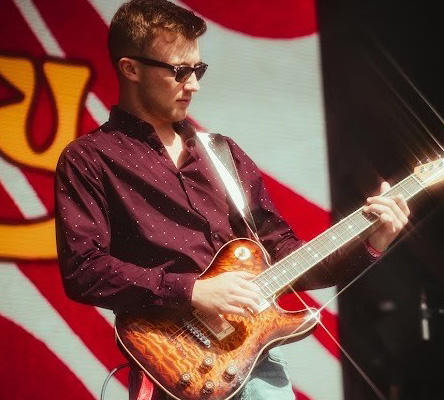
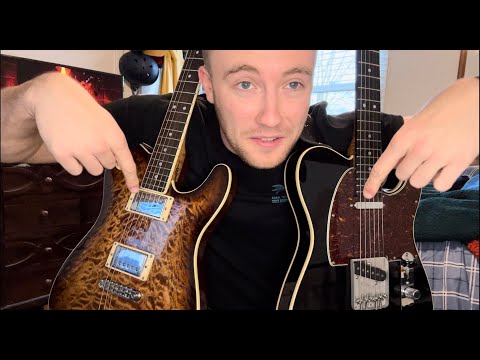
I have really enjoyed taking traditional shapes and adding my own modifications to them. One of my favorite builds with Warmoth captured all of my favorite guitar specs of an SG and a Telecaster. I created a Carved Top guitar with a compound radius 10-16 (found on Gibsons), a 59 LP neck profile, PAFs with 59LP wiring, all of the cutaways found on a Strat, a mahogany body the thickness of an SG with a quilted maple cap but a flame maple neck like a telecaster. The strings are though the body like a Telecaster as well. Man this thing is sweet.
Two of your main guitars are built from Warmoth parts. What drew you to Warmoth?
I have always built my own guitars. Once I got to Berklee, I began working on other peoples guitars. There were always things about big brand mass produced guitars that I wanted to slightly tweak for my liking. After a while I created a guitar in my head that had all of the best parts of all the guitars I had ever played and worked on. When I was much younger, I had bought a crazy looking Goncalo Alves neck from Warmoth for one of my Stratocasters. That neck was unreal! Due to this, I decided to give Warmoth a shot. The process of creating what I wanted and the ability to see in real time what I was creating got me hooked. I had a few questions and got talking to Spike at the shop and got carried away having an incredible conversation with a bunch of the guys in the shop. I fell in love with the company. Incredible quality, great user interface and the best customer service I have ever experienced.
Some people get really picky about neck specs, and others feel like they can adapt to most anything. What are the specs on a neck that matter most to you, and how critical are they?
What matters most to me are the neck profile (love the Warmoth 59 Roundback) and the fret size (5105 stainless are my favorites). As far as other spec goes, I dont mind too much. I do really like the warmoth side adjust truss rod creation. Something that has recently been peaking my interest is the power of roasted woods. A theory of mine about why vintage gear is so good is that, due to the age of the wood, the wood has had time to dry out making it more resonant. When you take a gorgeous piece of maple and roast that sucker until it is drier than the sahara, I believe it adds a bit extra resonance. Something else I should add is that, with the roasted maple necks from warmoth, my necks have not shifted in forever. I was half expecting to need to do a massive setup on my warmoth when moving from New England to the South, but the guitar stayed rock solid!
What’s next for Jake Baynes?
I have plans to be on the road and in the studio next year. Lots of working, playing and meeting new and incredible people. My goals are to play great music, meet awesome people and see the world.
Where can people go to hear your playing?
The fastest way to hear my playing is through youtube (just my name) or my Instagram and Tiktok accounts (jakebaynesofficial). Don't be scared to shoot me a message!