


Quartersawn Guitar Necks Explained!
-
 Aaron Cheney
- Warmoth Blog
- Dec 6, 2024
-
5767views

If you have been around the guitar world long enough you’ve likely heard the term “quartersawn” or “quartersawn neck”. In today's post we’ll be taking a look at what these terms mean, and how they affect your guitar’s tone, stability, and playability.
The terms quartersawn and flat sawn mean slightly different things depending on the context in which they are used. To a lumberjack or sawmill operator they refer to the method that will be used to cut up a log. To the people who use the resulting lumber (like furniture makers and guitar builders) they refer to the grain structure of a particular board. In this article we’ll mainly be referring to these terms as they apply to guitar necks, though we will also talk about how these boards are cut from a log.
Quartersawn and Flatsawn Boards
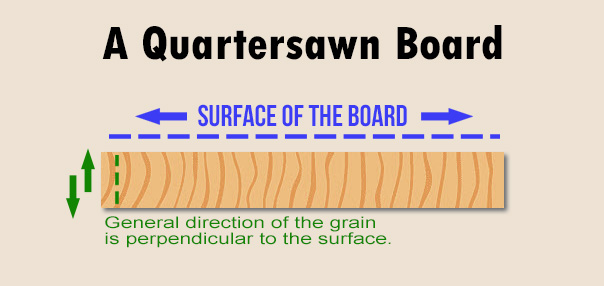
When describing finished lumber, quartersawn refers to a board in which the grain structure runs perpendicular to the surface. In other words, if you lay a piece of lumber (such as a guitar neck blank) on a table so that its surface is horizontal, the grain lines visible at each end will run vertically. It doesn’t have to be exactly 90 degrees perpendicular. Grain that runs within an 10-degree range either way can still be considered quartersawn.
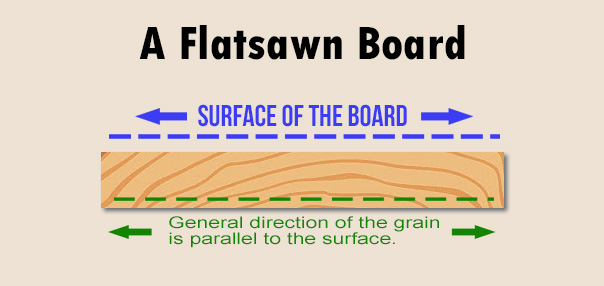
On the other hand, the grains of a flatsawn piece of lumber run parallel with the surface of the board. And as before, they don’t have to be perfectly parallel. Anything outside of quartersawn’s range is considered flatsawn.
How Logs are Sawn
Whether a board is flatsawn or quartersawn is determined by how the log it came from was sawn up, and where it was located within that log. This sounds complex, but it's actually easy to understand.
Flatsawn Logs
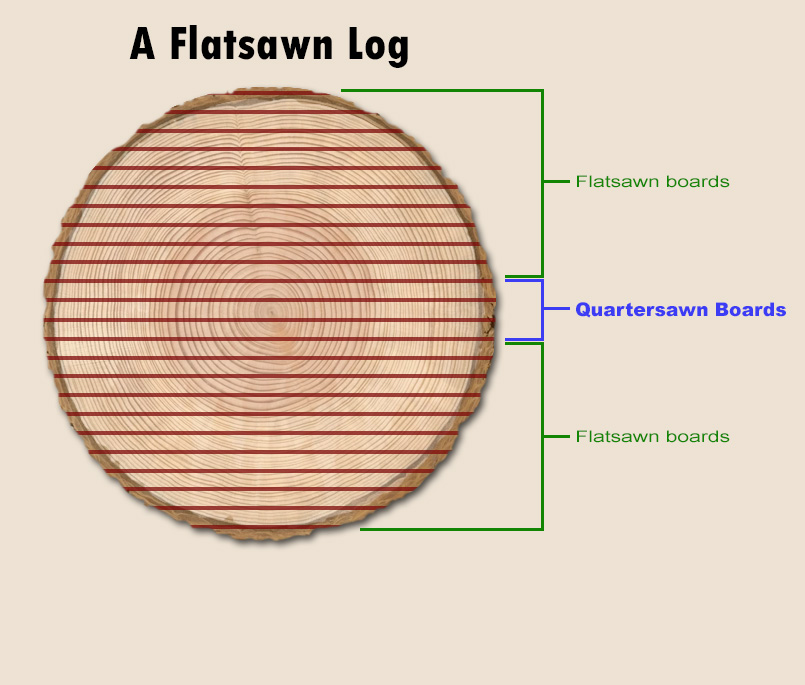
When a log is cut using the flatsawn method, it is simply sliced into boards from top to bottom, in the same fashion as you might slice up a block of cheese. The resulting boards will be mostly flatsawn, but those boards cut at or near the center will be quartersawn. Flatsawn logs have the highest yield because there is very little waste.
Quartersawn Logs
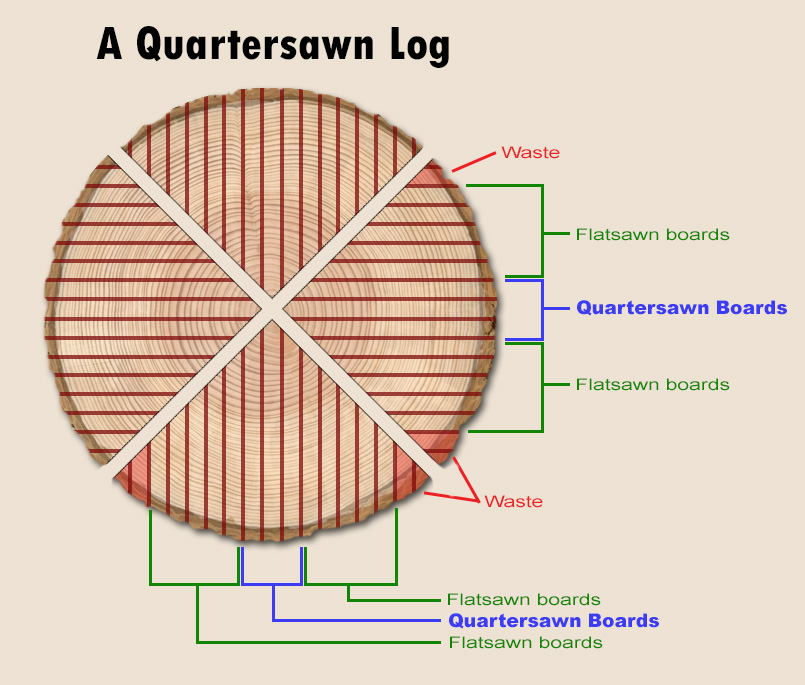
When a log is quartersawn it is first sliced lengthwise into quarters, afterwich each quarter is sliced into boards. Because the resulting boards are being cut along an additional axis, the log will now yield twice as many quartersawn boards as a log cut flatsawn. The trade-off is that doing this takes more time and skill, and there is slightly more waste.
This method of quartering a log before cutting it into boards is where the term "quartersawn" comes from.
Riftsawn Logs
There is also a third way to cut a log, known as riftsawn. In this method the log is first quartered, afterwhich each quarter is sliced up in a radial fashion. Nearly all the boards from a riftsawn log are quartersawn. However, this method results in so much waste that it is seldom used.
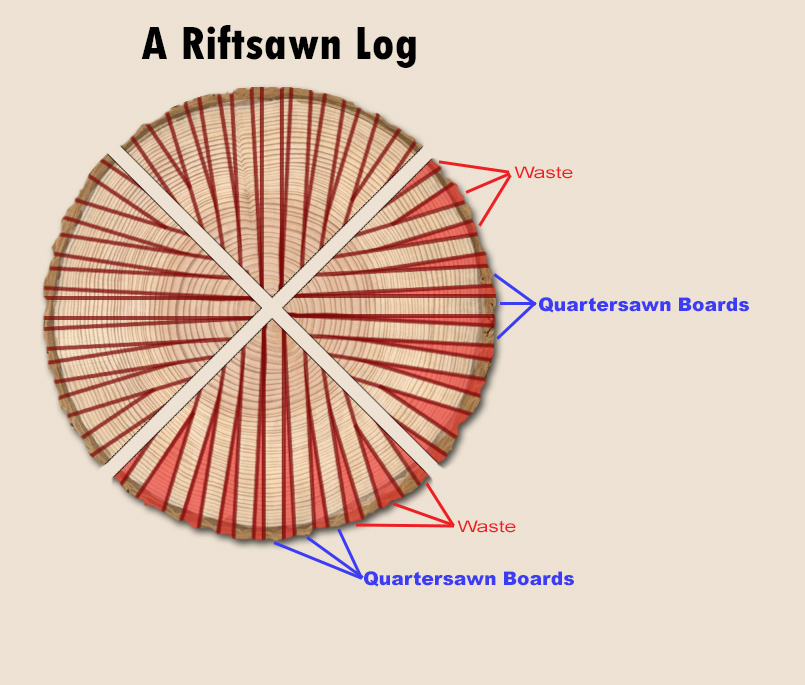
The Quartersawn Equation
Quartersawn lumber is more expensive than flatsawn for several reasons. As illustrated in the diagrams above, flatsawn logs yield only a small amount of quartersawn lumber. Quartersawn or riftsawn logs yield more, but also more waste - a cost which the lumber mill must recoup.
But there are more important reasons:
First, because its straight grainlines run perpedicular to the surface, quartersawn lumber is more dimensionally stable than flatsawn. This is important when making things that require strength, like chair and table legs, fine furniture, or guitar and bass necks.
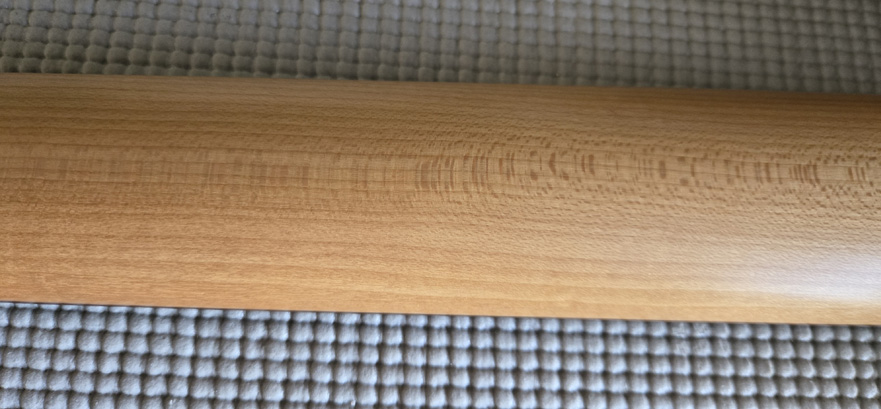
Additionally, many people consider the clean and straight grainlines of quartersawn wood more aesthetically attractive. Objects made from these boards can also exhibit a beautiful flecked pattern.
How to Tell if Your Neck Is Quartersawn
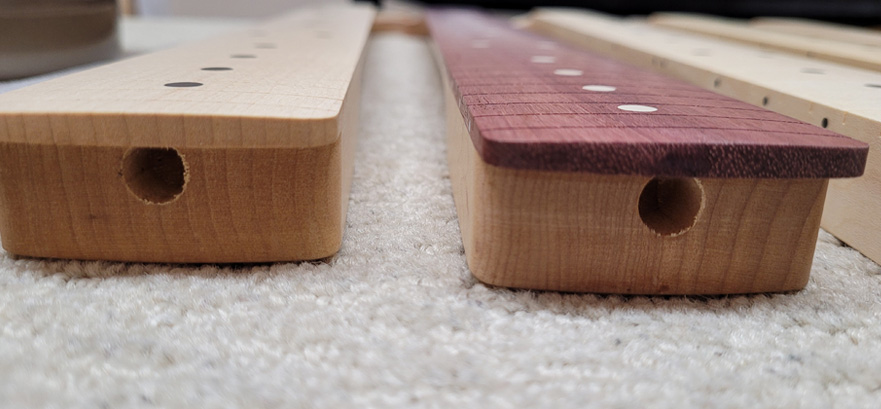
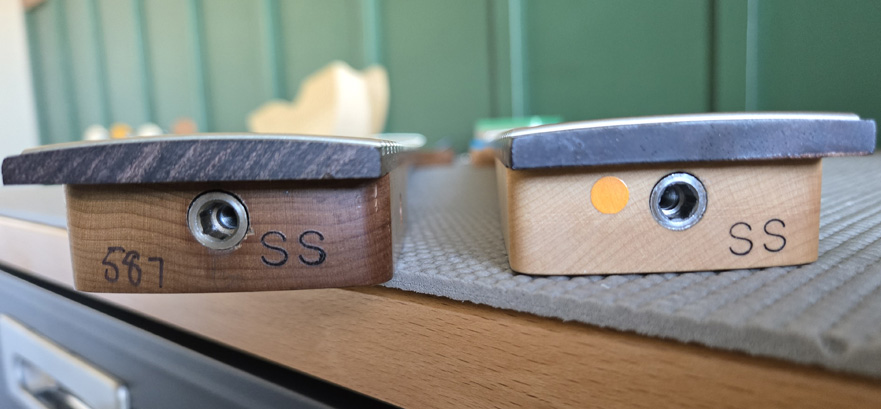
You can easily tell if your guitar or bass neck is quartersawn by looking at the grain lines on either end. Quartersawn necks will have grain lines running perpendicular to plane of the fretboard. On flatsawn necks the grain lines will run generally parallel to it.
Quartersawn for Guitar and Bass Necks
A quartersawn guitar or bass neck sounds essentially the same as a flatsawn one. The biggest differences lie in the feel and stability. Many players notice that flatsawn necks have more “give” when bending strings or using the whammy bar. They also flex more when placed under the tension of strings.
On the other hand, quartersawn necks often feel more stable , without as much give or flex. They also often require fewer seasonal adjustments, and tolerate differences in temperature and humidity better.
Since there is no difference in tone, whether a quartersawn neck is better for you depends mainly on your perception of its feel when playing, and whether that difference justifies the extra cost. For many players it does, including Eric Johnson, whose various signature Fender Stratocasters® all feature quartersawn necks.